Chess has always been more than a game for us. At Kaabil Kids, we see chess as a quiet training ground where children learn focus, patience, planning, confidence, and decision-making one move at a time.
That is exactly why we built Kaabil Kids around structured online chess classes for children. We wanted to move beyond casual chess apps and random videos, and give young learners a guided way to understand the game properly.
Our appearance on Shark Tank India brought this conversation into the spotlight. We were featured as an online chess training platform for children, with a focus on making chess learning more structured, accessible, and age-appropriate. Reports from Shark Tank India Season 3 highlighted Kaabil Kids as a chess-focused ed-tech platform for children between 5 and 15 years, with Grandmaster Tejas Bakre associated with our curriculum.
For us, this was not just a television milestone. It was a sign that online chess learning for kids is becoming more serious, more professional, and more widely accepted by parents across India.
Why Our Shark Tank India Appearance Matters
Our Kaabil Kids Shark Tank India moment matters because it placed children’s chess learning in front of a national audience. A subject that many parents once saw as an extra hobby is now being discussed as a structured learning path.
Through our Shark Tank India appearance, we were able to show that chess education has moved far beyond weekend classes or self-learning through scattered videos. Parents today want guided coaching, child-friendly teachers, regular practice, feedback, and a program that helps children grow steadily.
Our appearance also came at the right time. Chess in India is gaining more attention, and children are being introduced to the game much earlier. For many families, the question is no longer, “Should my child learn chess?” It is, “Where can my child learn chess properly?”
That is where we at Kaabil Kids come in.
How We Are Making Online Chess Learning More Accessible
One of the biggest advantages of online chess coaching is access. A child does not need to live near a traditional chess academy to learn from trained mentors. With the right online platform, children can learn from home, attend live classes, practise regularly, and build skills at their own pace.
At Kaabil Kids, we focus on affordable and accessible professional chess training. Our learning model includes a Grandmaster-designed curriculum, FIDE-rated trainers, practice sessions, progress tracking, and a structured learning environment designed especially for children.
This matters because children need more than someone explaining moves. They need a format that keeps them interested. They need lessons that match their age and level. They need regular practice so that ideas become habits.
For working parents, our online chess classes for kids also solve a practical problem. Travelling to a chess academy for kids may not always be possible, especially in busy cities. Online chess coaching makes learning easier to fit into a weekly routine without removing the discipline of formal training.
What Sets Kaabil Kids Apart in the World of Chess for Kids
Our biggest strength is our child-first approach. We do not look at Kaabil Kids only as a chess training program. We see it as a structured learning space where children receive guided practice, mental preparation, and steady encouragement.
At Kaabil Kids, we highlight Grandmaster Tejas Bakre as our chief mentor, along with FIDE-certified trainers and an in-house psychologist to support holistic development. Our online chess coaching also includes multiple levels, tournaments, tests, assignments, doubt-clearing sessions, Grandmaster webinars, and regular feedback.
That combination is important.
Chess can become overwhelming for children if it is taught only through theory. Our goal is to break the game into simple steps. We help children understand openings, tactics, calculation, endgames, and match practice without making learning feel heavy.
We also focus on competitive exposure through tests and tournaments. This helps children apply what they learn instead of only attending classes passively. For parents comparing a chess academy for kids, this kind of structure can make a real difference.
Why More Parents Are Choosing Online Chess Classes for Kids
Parents are choosing online chess classes for kids because chess offers both skill development and convenience. It gives children something productive to do online, but unlike passive screen time, chess demands active thinking.
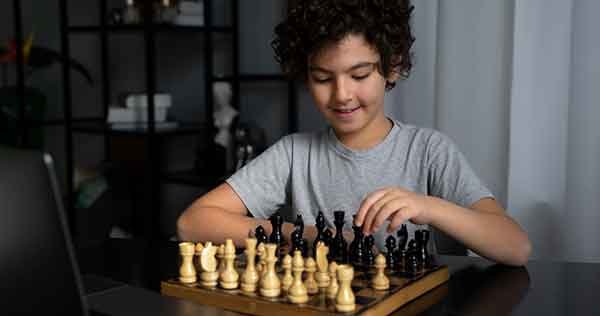
A child playing chess has to observe, calculate, wait, plan, respond, and learn from mistakes. These are useful habits, not only chess habits.
Our online chess classes make it easier for children to continue learning consistently. They do not have to depend on location, travel time, or irregular offline batches. When coaching is structured, online learning can feel just as guided and disciplined as in-person learning.
Another reason parents prefer online chess coaching is visibility. At Kaabil Kids, we focus on feedback, assessments, assignments, and progress updates so parents can understand how their child is improving, where they need support, and when they are ready for the next level.
For children who are shy, online learning can also feel less intimidating. They get the comfort of learning from home while still interacting with trainers and other young learners.
How Chess Helps Children Build Thinking Skills Beyond the Board
For us, the real value of chess is not limited to winning games. Chess teaches children how to think before acting. It teaches them that every move has a consequence.
A child who plays chess regularly begins to understand planning. They learn that rushing can lead to mistakes. They learn that losing one piece does not mean losing the whole game. They learn to stay calm, rebuild the position, and keep trying.
These lessons naturally support schoolwork and everyday decision-making.
Through chess, children can build:
Focus during long tasks
Patience while solving problems
Memory through patterns and positions
Confidence through steady improvement
Resilience after losses
Strategic thinking through planning ahead
This is why we believe chess is more than an extracurricular activity. It becomes a way to build sharper thinking in a structured and enjoyable format.
At Kaabil Kids, we try to make this journey easier by giving children the right mix of learning, practice, correction, and encouragement.
What Our Growth Means for the Future of Kids’ Chess Learning
Our Kaabil Kids episode Shark Tank India moment reflects a bigger shift in how parents view learning. Skill-based education is becoming more important, especially when it helps children build discipline, confidence, and independent thinking.
For years, chess was often treated as a niche interest. Now, it is becoming part of a wider conversation around child development, strategic thinking, and structured online learning.
Our growth also shows that parents are open to digital-first learning when the program feels credible, useful, and child-focused. The future of kids’ chess learning may not be limited to offline academies. It may become a blend of live online classes, digital practice platforms, trainer feedback, tournaments, and parent involvement.
This is good news for children. It means they can access better training earlier. It also means chess can reach children in more cities, not just those living close to established coaching centres.
We believe the next stage of online chess learning will focus on personalisation, child psychology, structured progress tracking, and stronger tournament readiness. At Kaabil Kids, we are already working in that direction through our curriculum-led and child-first approach.
Conclusion
Our Shark Tank India appearance was more than a television milestone for Kaabil Kids. It was a strong signal that online chess learning for children is becoming mainstream.
For parents, it opens up an important idea: chess does not have to remain a casual hobby. With the right guidance, it can become a powerful learning tool that builds focus, patience, planning, and confidence.
At Kaabil Kids, we bring together structured online chess classes, trained mentors, Grandmaster-led learning, regular practice, and child-focused support. That makes us a strong option for parents looking for professional online chess coaching and a reliable chess academy for kids in a flexible online format.
As more families discover the value of chess, we hope to play an important role in shaping how children learn, think, compete, and grow.
FAQs
Q1. What is Kaabil Kids?
Kaabil Kids is our online chess learning platform for children. We offer structured chess coaching, live classes, trained mentors, practice sessions, and a curriculum designed to help kids learn chess step by step.
Q2. Was Kaabil Kids featured on Shark Tank India?
Yes, we appeared on Shark Tank India Season 3 as an online chess training platform for children. Our pitch brought attention to online chess learning and structured chess education for kids.
Q3. What age group is Kaabil Kids suitable for?
Kaabil Kids is mainly focused on children. Shark Tank India coverage described our platform as being aimed at children between 5 and 15 years old.
Q4. Are online chess classes good for kids?
Yes, online chess classes can be useful for kids when they include live coaching, structured lessons, regular practice, feedback, and age-appropriate teaching. At Kaabil Kids, we design our classes to help children learn chess while building focus, patience, memory, and problem-solving skills.
Q5. Why should parents choose online chess coaching?
Parents choose online chess coaching because it is flexible, accessible, and easier to fit into a child’s routine. Our online format allows children to learn from trained coaches without needing to travel to a physical chess academy.
Q6. What makes Kaabil Kids different from regular chess classes?
At Kaabil Kids, we focus on a Grandmaster-designed curriculum, FIDE-rated trainers, regular tournaments, assignments, progress tracking, and child-focused development support. Our aim is to make chess learning structured, engaging, and meaningful for every child.