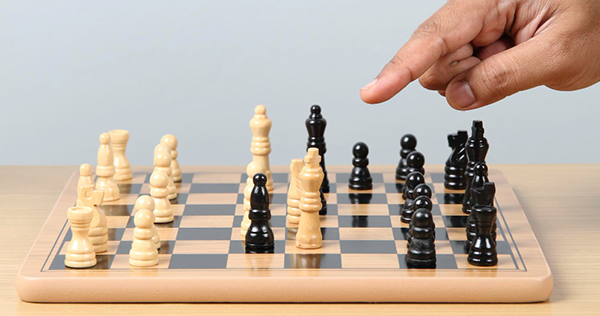
Learning chess can feel exciting for kids, but the board can look a little confusing at first. There are many pieces, each piece moves differently, and every move changes what happens next.
That is why the first step in learning chess is simple: understand the pieces.
Before a child learns checkmate, openings, tactics, or strategy, they need to know the chess pieces names and how chess pieces move. Once this becomes clear, the game starts feeling less difficult and much more fun.
At Kaabil Kids, chess is taught in a child-friendly way so young learners can build confidence step by step. Through structured online chess classes for kids, children learn the basics, practise with guidance, and slowly develop stronger thinking skills.
This guide explains the chess pieces in a simple way, so kids and parents can understand the board better before starting formal chess classes for kids.
Why Understanding the Pieces Is the First Step in Learning Chess
Every chess game begins with the same 32 pieces on the board. Each player has 16 pieces: one king, one queen, two rooks, two bishops, two knights, and eight pawns.
For a beginner, this may sound like a lot. The good news is that once children understand what each piece does, chess becomes easier to follow.
Knowing the pieces helps kids answer basic questions like:
Which piece can move far?
Which piece moves in a straight line?
Which piece moves diagonally?
Which piece protects the king?
Which piece is most important?
These are the building blocks of beginner chess basics. A child who understands piece movement can start playing small games, solving simple puzzles, and recognising threats on the board.
Many children lose pieces in the beginning because they are not sure where each piece can go. That is completely normal. With practice and support from an online chess tutor, kids can learn to see the board more clearly.
What Each Chess Piece Is Called and How It Moves
To understand chess rules for kids, it helps to learn one piece at a time. Each piece has its own role, movement style, and value.
| Chess Piece | How It Moves | Simple Way To Remember |
|---|---|---|
| King | One square in any direction | The king moves slowly because he must stay safe |
| Queen | Any number of squares in straight or diagonal lines | The queen is the most powerful mover |
| Rook | Any number of squares in straight lines | The rook moves like a road, straight ahead or sideways |
| Bishop | Any number of squares diagonally | The bishop moves on slanting lines |
| Knight | In an L-shape | The knight jumps in a funny L pattern |
| Pawn | One step forward, captures diagonally | The pawn marches forward but captures sideways |
Queen
The queen is the most powerful piece. She can move in straight lines and diagonal lines for as many squares as possible, as long as nothing blocks her path.
Kids usually love the queen because she can move almost everywhere. Still, beginners should learn not to bring the queen out too early because she can become a target.
Rook
The rook moves in straight lines. It can go forward, backward, left, or right for many squares.
Rooks become very strong when the board opens up. They are also important in castling, which is a special move used to protect the king.
Bishop
The bishop moves diagonally. One bishop stays on light squares, and the other bishop stays on dark squares throughout the game.
This is a useful detail for kids to remember. A bishop can travel far, but only on its own colour.
Knight
The knight moves in an L-shape: two squares in one direction and one square to the side. It is also the only piece that can jump over other pieces.
The knight may feel tricky at first, but children often enjoy it once they understand the pattern. Knights are great for forks, which means attacking two pieces at the same time.
King
The king is the most important piece in chess. It moves one square in any direction: forward, backward, sideways, or diagonally.
The king is not the strongest piece, but it must be protected at all times. When the king is attacked, it is called check. The main goal of chess is to checkmate the opponent’s king.
Pawn
Pawns move forward one square, but they capture diagonally. On their first move, a pawn can move two squares forward.
Pawns may seem small, but they are very important. A pawn that reaches the other side of the board can become a queen, rook, bishop, or knight. This is called promotion.
Which Pieces Are Stronger and Why That Matters for Beginners
In chess, pieces have different values. These values help beginners understand which trades are good and which trades may be risky.
Here is a simple value guide:
| Piece | Common Value |
|---|---|
| Pawn | 1 point |
| Knight | 3 points |
| Bishop | 3 points |
| Rook | 5 points |
| Queen | 9 points |
| King | Priceless |
The king does not have a point value because losing the king means losing the game.
For beginners, piece value is useful because it helps them make better choices. For example, trading a pawn for a queen is excellent. Trading a queen for a pawn is usually a mistake.
Children should not memorise values only as numbers. They should also understand how pieces work together. A knight in the centre can be stronger than a bishop stuck behind pawns. A rook on an open file can become very powerful. A queen is strong, but it still needs support.
This is why guided learning in an online chess class can help. A coach can explain not only what a piece is worth, but how to use it properly.
Simple Tips to Help Kids Remember Piece Movement
Kids learn faster when chess feels visual and playful. Instead of only memorising rules, they can connect each piece with a simple idea.
Here are a few easy memory tricks:
The rook moves like a car on straight roads.
The bishop moves like a slide on diagonal paths.
The queen moves like a rook and bishop together.
The king takes tiny careful steps.
The knight jumps in an L-shape.
The pawn marches forward but captures diagonally.
Parents can also place one piece on an empty board and ask the child to show all the squares it can move to. This makes learning active.
Another helpful method is piece-by-piece practice. Start with only rooks. Then bishops. Then queen. Then knight. Once the child understands each piece separately, mix them together.
In online chess classes for kids, this is often done through puzzles, mini-games, and guided practice. Children do not have to learn everything in one day. Small steps work best.
Common Mistakes Kids Make While Learning the Pieces
Every beginner makes mistakes while learning chess. That is part of the process.
One common mistake is moving the pawn incorrectly. Kids may move pawns backward or try to capture straight ahead. Parents can gently remind them: pawns move forward, but capture diagonally.
Another mistake is confusing the rook and bishop. Since both can move far, children may forget that the rook moves straight while the bishop moves diagonally.
The knight also creates confusion in the beginning. Its L-shape movement takes practice. A good way to learn the knight is by placing it in the middle of the board and counting all the squares it can jump to.
Children may also overuse the queen. Since the queen is powerful, beginners often bring her out too early. This can lead to attacks from smaller pieces.
The biggest mistake is not noticing when a piece is under attack. Kids may make a move without checking what the opponent can capture next. This is why a good online chess tutor teaches children to pause and ask, “Is my piece safe?”
Mistakes should not be treated as failure. They are learning moments.
How Parents Can Make Piece Learning More Fun at Home
Parents do not need to be chess experts to help children learn the pieces. A little practice at home can make a big difference.
Start by making the board familiar. Let the child set up the pieces. Ask them to name each piece. Then ask simple questions like, “Which one is the king?” or “Which piece moves diagonally?”
Parents can also create small challenges:
Can the rook reach this square?
Can the bishop capture this piece?
How many moves will the knight need?
Which piece is attacking the queen?
Can the pawn move two steps from here?
These small games make chess feel less like homework.
Another fun activity is storytelling. The king needs protection. The queen is powerful. The rook guards straight roads. The bishop moves on diagonals. The knight jumps over the crowd. The pawn is small but brave.
For children, stories often make rules easier to remember.
Once the child is comfortable, parents can explore structured chess classes for kids where learning becomes more consistent. With Kaabil Kids, children can continue from basic piece movement to tactics, checkmate patterns, openings, and game practice.
Conclusion
Learning the chess pieces is the first big step in a child’s chess journey. Once children know the names, movements, and values of the pieces, the board starts making sense.
The king teaches safety. The queen teaches power. The rook teaches straight-line control. The bishop teaches diagonals. The knight teaches creative movement. The pawn teaches patience and progress.
Together, these pieces help children build the foundation for better chess.
With Kaabil Kids, young learners can understand beginner chess basics through structured, child-friendly learning. Through an online chess class, guided practice, and support from trained coaches, kids can move from simple piece movement to real chess thinking.
Chess becomes easier when every piece has a clear role. Once children understand that, they are ready to enjoy the game one move at a time.
FAQs
Q1. What Are The Names Of The Chess Pieces?
The six chess pieces are the king, queen, rook, bishop, knight, and pawn. Each player starts with one king, one queen, two rooks, two bishops, two knights, and eight pawns.
Q2. How Do Chess Pieces Move?
Each chess piece moves differently. The king moves one square, the queen moves straight and diagonally, the rook moves straight, the bishop moves diagonally, the knight moves in an L-shape, and the pawn moves forward but captures diagonally.
Q3. Which Chess Piece Is The Most Important?
The king is the most important chess piece because the goal of the game is to checkmate the opponent’s king. The queen is the most powerful piece, but the king must always be protected.
Q4. Which Chess Piece Is The Hardest For Kids To Learn?
The knight is often the hardest piece for kids to learn because it moves in an L-shape and can jump over other pieces. With practice, children usually start enjoying the knight’s unique movement.
Q5. What Are Beginner Chess Basics For Kids?
Beginner chess basics include learning the board, chess pieces names, how chess pieces move, check, checkmate, captures, safe moves, and simple opening principles.
Q6. Are Online Chess Classes For Kids Helpful?
Yes, online chess classes for kids are helpful when they include live teaching, practice, puzzles, game review, and child-friendly explanations. They help children learn chess step by step from home.
Q7. Why Choose Kaabil Kids For Chess Classes For Kids?
Kaabil Kids offers structured chess learning for children through guided lessons, practice, and age-friendly coaching. It helps kids understand chess rules, piece movement, tactics, and thinking skills in a simple way.
Q8. Can An Online Chess Tutor Help My Child Learn Faster?
Yes, an online chess tutor can help a child learn faster by correcting mistakes, explaining moves clearly, giving practice positions, and helping the child build strong chess habits from the beginning.