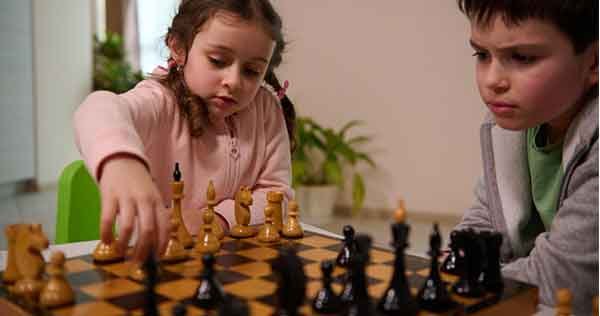
Choosing the right chess coaching in Bangalore for your child can feel like a big decision. There are many options today, from offline academies and private tutors to structured online chess coaching programs. For parents, the real challenge is not finding a chess class. It is finding the right learning environment for the child.
Chess is more than a game of kings, queens, and pawns. For children, it can become a powerful way to build focus, patience, memory, decision-making, planning, confidence, and problem-solving. This is why many parents now see chess as a meaningful skill-building activity, not just a hobby.
Still, every child learns differently. Some children are complete beginners. Some already know the rules but need better practice. Some want to play tournaments. Some simply need a calm activity that improves thinking skills.
At Kaabil Kids, chess learning is designed to be structured, child-friendly, and accessible. Through guided online chess coaching, children can learn step by step, practise regularly, and build strong chess habits without depending only on location-based options.
Why Many Bangalore Parents Prefer Skill-Based Activities For Kids
Bangalore is a city where many parents actively look for activities that go beyond academics. Children have busy school schedules, screen exposure, competitive environments, and multiple extracurricular choices. Parents want activities that are productive, but not stressful.
Chess fits well into this need.
It gives children a quiet space to think. It teaches them to pause before acting. It helps them understand that every decision has a result. Over time, chess can improve concentration, patience, memory, and logical thinking.
This is why kids chess coaching is becoming a popular choice among parents who want something meaningful and long-term. A good chess program does not only teach children how to win games. It teaches them how to think better.
For a beginner, chess starts with simple rules and piece movement. Slowly, the child begins to understand patterns, attacks, defence, planning, and checkmate ideas. That journey can be exciting when the coaching is age-appropriate and encouraging.
Many parents in Bangalore also prefer structured activities because they want visible progress. A casual activity may keep a child occupied, but a skill-based activity helps them grow. Chess gives parents that balance between fun and learning.
What Good Chess Coaching Looks Like For Young Learners
Good chess coaching for children should be clear, structured, and engaging. It should not feel like a random set of chess lessons.
A strong program should begin by understanding the child’s current level. A beginner should first learn board setup, piece movement, check, checkmate, safe moves, and basic captures. A child who already knows the basics may need tactics, opening principles, middle-game planning, and endgame practice.
Good beginner chess classes should never rush the child into advanced theory. Children need time to become comfortable with the board. If the basics are weak, they may struggle later.
A good chess coach should include:
Piece movement and board basics
Simple tactics and checkmate patterns
Opening principles
Practice games
Puzzle solving
Mistake review
Time management
Confidence-building exercises
Regular feedback
The teacher’s role is also very important. Children need a coach who can explain patiently, ask questions, encourage thinking, and correct mistakes without making the child feel embarrassed.
At Kaabil Kids, the focus is on structured chess learning that supports children at different stages. The idea is simple: help children understand the game properly, not just memorise moves.
How To Compare Coaching Quality Beyond Marketing Claims
Many programs may look impressive online. They may mention rankings, tournaments, expert coaches, or success stories. These things can be useful, but parents should look deeper before choosing a chess academy Bangalore option or an online program.
The first thing to check is structure. Does the program have levels? Does it explain what the child will learn in each stage? Is there a clear path from beginner learning to stronger gameplay?
The second thing to check is teaching style. A coach may be a strong player, but that does not always mean they are good with children. Kids need simple explanations, patience, and encouragement.
The third thing to check is practice. Chess cannot be learned only through lectures. Children need to play, solve, test ideas, make mistakes, and review those mistakes.
Parents should be careful of programs that only make big claims but do not explain the learning process. A good program should be able to answer practical questions clearly.
Use this simple parent checklist before enrolling:
Is the class suitable for my child’s age?
Is the level beginner, intermediate, or advanced?
Will my child get regular practice?
Will games be reviewed?
Will parents receive feedback?
How many students are in one batch?
Is the teaching live and interactive?
Can the child move to the next level later?
Is the focus only on competition or overall learning too?
This checklist helps parents compare real coaching quality, not just marketing.
Why Class Size, Feedback, And Practice Matter
Three things can make a major difference in a child’s chess journey: class size, feedback, and practice.
Class size matters because children need attention. If a batch is too large, a child may not get enough chances to ask questions or receive corrections. Smaller or well-managed groups usually help children stay more engaged.
Feedback matters because children often repeat the same mistakes without realising it. A child may keep losing the queen early, missing checks, or moving pieces without a plan. A coach can point out these patterns and help the child improve.
Practice matters because chess is a skill. Children cannot become better only by listening. They need to solve puzzles, play games, review positions, and try again.
Good chess practice should include both guided and independent work. In class, the coach can explain concepts and review mistakes. Outside class, the child can solve puzzles or play short games to strengthen learning.
This is where structured online chess coaching can work well. A good online program can include live teaching, digital boards, puzzles, homework, game review, and regular progress tracking.
Parents should look for a program where the child is active in class. The child should not only watch the coach. They should answer, solve, move pieces, explain ideas, and play.
How To Decide Between Local And Online Options
Parents often wonder if they should choose local chess classes Bangalore options or online coaching. Both can work well. The right choice depends on the child’s learning style, family schedule, and coaching quality.
Local chess classes can be useful if the child enjoys in-person learning and the academy is nearby. Some children like sitting across from another player and using a physical board.
Online chess coaching can be useful for families who want flexibility, structured learning, and access to trained coaches without travel time. For Bangalore parents dealing with traffic, school schedules, and multiple activities, online classes can be more practical.
Here is a simple comparison:
| Factor | Local Chess Classes | Online Chess Coaching |
|---|---|---|
| Travel | Requires commute | Learn from home |
| Flexibility | Fixed location and timings | Easier to manage schedules |
| Coach Access | Limited by area | Wider access to trained coaches |
| Practice Tools | Physical board practice | Digital boards, puzzles, analysis |
| Parent Visibility | Depends on academy updates | Easier to track class and feedback |
| Comfort | Good for in-person learners | Good for home-based learners |
The best choice is not always offline or online. The best choice is the one where your child learns consistently, receives feedback, and enjoys the process.
For many families, Kaabil Kids offers a strong middle path through structured online chess coaching that feels guided, interactive, and child-friendly.
Conclusion
Finding the right chess coaching in Bangalore is not only about choosing a nearby academy or the most advertised program. It is about choosing the right learning environment for your child.
A good chess program should be structured, interactive, age-appropriate, and supportive. It should include practice, feedback, game review, and a clear learning path. Most importantly, it should help the child enjoy chess while building stronger thinking skills.
Parents should compare coaching quality beyond marketing claims. Look at the teaching style, batch size, feedback system, level structure, and practice format. These details matter because they shape how confidently a child learns.
With Kaabil Kids, children can explore chess through guided online chess coaching designed for young learners. From beginner basics to stronger gameplay, the goal is to help children build focus, patience, confidence, and better decision-making.
The right chess class does more than teach moves. It helps children learn how to think.
FAQs
Q1. What Should Parents Look For In Chess Coaching In Bangalore?
Parents should look for structured lessons, child-friendly teaching, regular chess practice, progress feedback, suitable batch size, and a learning level that matches the child’s age and skill.
Q2. Are Online Chess Classes Good For Kids In Bangalore?
Yes, online chess coaching can be useful for kids in Bangalore because it saves travel time and gives children access to structured learning, trained coaches, puzzles, games, and regular feedback.
Q3. How Do I Choose A Good Chess Academy In Bangalore?
Choose a chess academy Bangalore option that offers clear levels, experienced child-friendly coaches, practice games, mistake review, parent updates, and a positive learning environment.
Q4. What Age Is Good For Beginner Chess Classes?
Many children can start beginner chess classes around the age of 5 or 6, depending on their interest and attention span. The class should begin with simple rules, piece movement, and fun practice.
Q5. Why Is Class Size Important In Kids Chess Coaching?
Class size matters because children need attention, correction, and chances to ask questions. A smaller or well-managed batch usually creates a better learning environment.
Q6. How Much Chess Practice Should Kids Do?
Children can start with short, regular practice sessions. Even 15 to 20 minutes of puzzles, games, or board review a few times a week can help beginners improve steadily.
Q7. Why Choose Kaabil Kids For Online Chess Coaching?
Kaabil Kids offers structured online chess coaching for children, helping them learn chess step by step through live guidance, practice, feedback, and age-friendly teaching.
Q8. Can Chess Help With Child Development?
Yes, chess can support child development by improving focus, patience, memory, planning, problem-solving, confidence, and decision-making skills.