Are Online Chess Classes Worth the Investment? A Parent’s Cost vs Value Guide
A parent scrolls past a free chess tutorial on YouTube, then a paid online chess class charging a monthly fee for what looks, on the surface, like the same board and the same rules. The obvious question follows: why pay for something a search engine hands over for free?
The honest answer is that cost and value are not the same thing. A free video a child watches once and forgets delivers zero value no matter the price tag. A structured programme a child sticks with for a year, and that measurably improves how they think, can be worth far more than its fee suggests. This guide breaks down what online chess classes for kids actually cost, what parents are really paying for, and how to judge whether a programme, including one like Kaabil Kids, delivers genuine value for a child’s online learning for kids journey.
What Do Online Chess Classes Typically Cost?
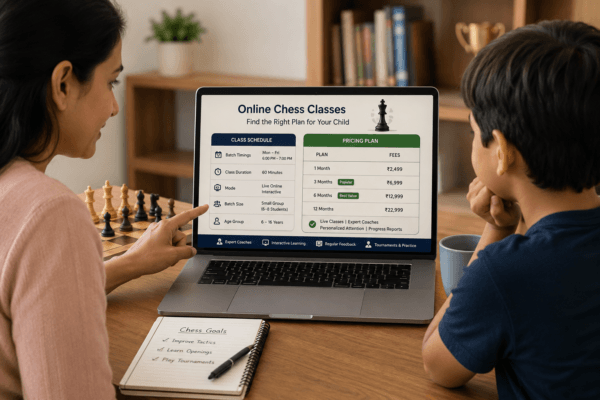
Pricing depends on three factors: whether classes are individual or group, how many sessions are included, and the coach’s experience level. Group classes are usually more affordable per session, while one-on-one coaching costs more but delivers focused, personalised attention.
Most programmes sell monthly or multi-month packages rather than single sessions, since consistency matters more than one-off classes for a child working through chess classes for beginners. A course with a structured curriculum, assignments and tournament access will cost more than a bare video call with a coach, but it also delivers far more long-term value. That trend is reflected at the market level: the global chess learning platforms market was valued at $2.8 billion in 2025 and is projected to grow at 11.7% annually through 2034, driven largely by rising demand for structured coaching over casual, unstructured play (Dataintelo, 2025).
Cost vs Value: Here’s Why Online Chess Classes Is Worth the Investment
For most families, yes, provided the programme offers structured, live coaching rather than passive content. The real question isn’t “how much does it cost,” but “what does my child actually gain from it.”
That gain is measurable, not anecdotal. A meta-analysis covering 24 separate studies found that chess instruction causes children to perform a little to moderately better on math and broader cognitive tasks compared with children who received no chess instruction (Sala & Gobet, Educational Research Review). Free resources or one-off videos may teach the rules, but they rarely build the discipline and accountability that produce results like these. Weighed against what a child gains in concentration and confidence, a well-designed programme tends to justify its price far more than it first appears to.
How to Choose an Online Chess Coaching Program That Offers Real Value
Not all online classes are built the same way. Before enrolling, check for a few essentials:
- Qualified trainers: FIDE-rated or tournament-experienced coaches, not just enthusiastic hobbyists.
- Structured curriculum: Clear levels, beginner to advanced, rather than random, unconnected lessons.
- Live interaction: Real-time classes so coaches can correct mistakes and adjust pacing.
- Progress tracking: Assessments and leaderboards that show whether your child is actually improving.
- Practice opportunities: Regular tournaments and platform access to reinforce what’s taught in class.
| What to Check | Weak Programme | Value-Driven Programme |
|---|---|---|
| Curriculum | Random, unconnected lessons | Structured, level-by-level progression |
| Coaching | Recorded or unverified instructors | FIDE-rated, live coaches |
| Progress | No tracking | Regular assessments and reports |
| Practice | Class only | Class plus tournaments and puzzles |
Parents searching for chess classes for kids near me often find that online programmes now match, and sometimes exceed, the structure of local academies, minus the commute.
Why Kaabil Kids Offers Value-Driven Online Chess Classes for Kids
Kaabil Kids is built around the idea that value comes from structure, not just screen time. Every course follows a curriculum designed by International Grandmaster Tejas Bakre, delivered by FIDE-rated trainers who track each child’s progress through assignments and regular assessments.
Students also get access to monthly tournaments, doubt-clearing sessions and webinars, turning a single weekly class into an ongoing learning environment. An in-house psychologist supports motivation and confidence alongside the chess curriculum itself. This is what separates genuine online chess coaching from a simple video subscription: the coaching adapts to the child, not the other way around.
Hidden Costs Parents Should Consider Before Choosing Chess Classes Online
Beyond the listed course fee, a few hidden costs can affect real value:
- Low engagement, high dropout: A cheap course a child loses interest in within weeks costs more per completed lesson than a pricier one they stick with.
- Group vs individual trade-offs: Group classes are budget-friendly and add peer interaction, while individual coaching accelerates progress for competitive learners. The better choice depends on your child’s goals, not just the price.
- Extra fees: Some platforms charge separately for tournaments or materials that others bundle into the course.
- Time investment: Parents comparing chess classes near me should also weigh the commute time saved by online formats, a real, if indirect, benefit.
Understanding the Value Parents Receive Beyond the Course Fee
Yes, when taught consistently. Chess requires children to plan ahead, weigh consequences and recover from mistakes, skills that transfer well beyond the board. A 2025 study published in Frontiers in Psychology compared children in structured chess programmes against a control group and found statistically significant improvements in attention, memory, logical thinking, patience, self-discipline, and even math and reading scores (p<0.001) (Frontiers in Psychology, 2025).
A good programme should build:
- Stronger concentration and patience
- Improved memory and pattern recognition
- Better decision-making under pressure
- Growing confidence from visible progress
- Healthy learning habits like consistency and discipline
These outcomes are what turn a course fee into a long-term investment rather than a short-term expense.
Conclusion
So, are online chess classes for kids worth the investment? When the programme is structured, coach-led and focused on measurable growth, the answer is a clear yes. The value isn’t just in learning chess moves, it’s in the concentration, discipline and confidence a child builds along the way, backed by results that show up well beyond the chessboard.
If you’re comparing options and want a programme that combines expert coaching with real progress tracking, explore what Kaabil Kids’ online chess coaching offers and book a free trial class to see the value for yourself.
Frequently Asked Questions
Q1. What age is best to start online chess classes?
Most coaches recommend starting between ages 5 and 8, though children of any age can benefit from structured chess coaching.
Q2. What equipment does a child need for online chess classes?
A laptop, tablet or desktop with a stable internet connection is usually all that’s required to get started.
Q3. How long does it take to see improvement in a child’s chess skills?
With consistent weekly classes, most children show noticeable improvement in strategy and focus within 2 to 3 months.
Q4. What safety standards should parents expect from online chess platforms?
Reputable platforms use verified, background-checked trainers and monitored sessions, making them a safe option for young learners.
Q5. Can online chess classes help with academic performance?
Research indicates yes: chess instruction has been linked to measurable gains in math and reading scores alongside improved attention and logical thinking.
Q6. What’s the difference between beginner and advanced online chess classes?
Beginner classes focus on rules, piece movement and basic tactics, while advanced levels cover opening theory, endgames and tournament strategy.
Q7. Should I choose group or individual online chess coaching for my child?
Group classes suit children who enjoy peer interaction and a lower cost, while individual coaching suits those aiming for faster, competitive progress.