Table of Contents
- Introduction
- What a Coach Adds Value
- Diagnosis of Patterns
- Correcting Thinking Habits Live
- 7 Thinking Upgrades Kids Get with 1:1 Coaching
- What a Good Coaching Session Looks Like
- Accelerating Improvement Through Personalized Feedback
- The Real Transformation at the Board
- Conclusion
- FAQs
Introduction
Most children do not stay stuck in chess because they lack effort. They stay stuck because they keep repeating the same thinking mistakes without noticing them.
One child moves too quickly. Another sees only their own idea and misses the opponent’s threat. Another knows tactics in puzzles but cannot find them in a real game. On the outside, all of them look like they just need “more practice.” In reality, they need better thinking habits at the board.
That is where a coach changes everything.
A good online chess tutor does more than explain openings or correct wrong moves. Good coaching helps a child slow down, scan properly, evaluate positions more clearly, and make decisions with more confidence. Strong coaches on Chess.com repeatedly describe their work as personalized, focused on identifying weaknesses, building independent thinkers, and analyzing student games to find recurring mistakes.
At Kaabil Kids, that is the real goal of online chess classes for kids. Chess improvement is not only about learning new ideas. It is about changing how a child thinks before every move.
What a Coach Adds Value
A child can learn piece movement from videos. They can solve tactics from apps. They can even memorise opening moves from short clips.
A coach adds something those tools usually cannot: live diagnosis.
Strong chess coaches consistently emphasize that improvement is personal. They look at sample games, identify strengths and weaknesses, and build training around the student’s actual level instead of pushing the same plan on everyone. Coaches interviewed by Chess.com and listed on Lichess describe personalized training, game review, weakness-spotting, and practical decision-making as central to their work.
That matters because two children with the same rating often need very different help.
- One may need board vision
- One may need calmer move selection
- One may need to stop chasing opening tricks
- One may need better endgame focus
- One may simply need to ask, “What is my opponent threatening?” before every move
A real Chess Coach helps a student work on the right problem, not just do more random training.
Diagnosis of Patterns
Most beginners do not lose because of one dramatic mistake. They lose because of patterns.
Maybe they leave pieces undefended. Maybe they forget king safety. Maybe they grab pawns without checking tactics. Maybe they rush when they are winning. Maybe they freeze when the position becomes unclear.
This is where coaching becomes powerful. Good coaches do not only say, “This move was wrong.” They ask, “Why did you choose it?” That question reveals the pattern underneath.
A recent Chess.com coaching feature described this clearly. One coach said beginners are often pushed toward opening memorization too early, when the real issue is basic board vision and not asking simple safety questions before capturing. Other coaches describe their job as helping students recognize recurring mistakes across both wins and losses.
That shift is huge for children. Once a child starts hearing feedback like:
- “You are moving before scanning checks, captures, and threats”
- “You are seeing your plan, but not your opponent’s reply”
- “You panic after one mistake and then speed up”
- “You know the tactic, but you are not finding candidate moves first”
they stop seeing chess as random. The board becomes more understandable.
Correcting Thinking Habits Live
This is the part that videos cannot do well.
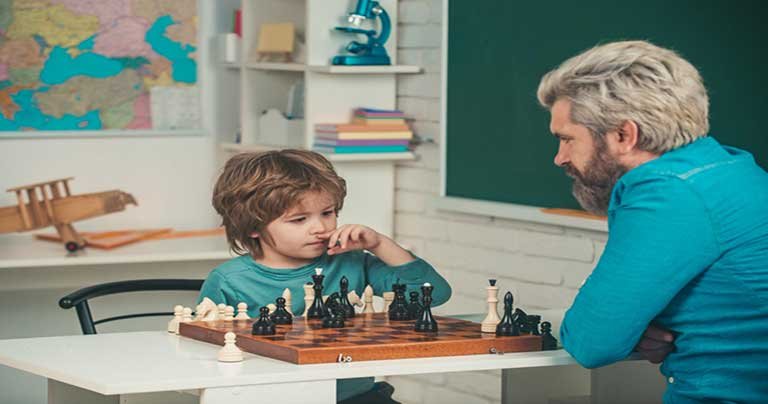
A video can explain a fork. A puzzle can test calculation. Neither one can interrupt a child mid-thought and say, “Pause. What did you miss here?”
Live correction changes everything because it catches the mistake at the moment it happens.
That is why one-on-one feedback matters so much. Chess.com’s beginner improvement guidance notes that analyzing games with a stronger player reveals weaknesses and gives personalized advice that can accelerate progress. Coaches also stress helping students evaluate positions, identify critical moments, and make better decisions under pressure, not just memorize theory.
Here is what live correction often sounds like in a coaching session:
- “You saw your attack, but what is Black threatening?”
- “Why is this move tempting you?”
- “List three candidate moves before you choose.”
- “Is that capture safe?”
- “What changed after your opponent’s last move?”
- “You do not need the best move yet. Start with a safer move.”
Over time, these questions become the child’s internal voice. That is the transformation. The coach’s voice slowly becomes the student’s own thinking process.
7 Thinking Upgrades Kids Get with 1:1 Coaching
1. They stop moving on impulse
Many beginners play the first move that looks active. Coaching teaches them to pause first.
2. They start checking the opponent’s ideas
This is one of the biggest changes. Children begin to ask what the other side wants, not only what they want.
3. They improve board vision
Chess improvement advice for beginners often highlights visualization and square recognition as fundamental. Coaches use targeted exercises to strengthen this skill because many errors come from simply overlooking what is already on the board.
4. They think in patterns, not panic
Instead of seeing every position as completely new, they begin spotting repeated tactical and strategic ideas.
5. They evaluate more calmly after mistakes
Chess for kids is often praised for teaching concentration, patience, problem-solving, and coping with defeat. Those benefits matter even more in coaching, where mistakes are turned into lessons rather than emotional setbacks.
6. They become more patient with calculation
A coach trains the child to think one move deeper, compare options, and avoid rushing through unclear positions.
7. They build confidence from clarity
Confidence at the chess board does not come only from winning. It comes from knowing how to think. When children understand why a move works or fails, their confidence becomes steadier and more real.
These are the kinds of changes parents notice outside chess too. Better patience. Better focus. Better decision-making. Chess articles for children often highlight those broader benefits, especially concentration, planning, and critical thinking.
What a Good Coaching Session Looks Like
A good coaching session should not feel like a lecture. It should feel active, focused, and personal.
Usually, the best sessions include:
1. Game review
The coach starts from the child’s real games, not random theory. This shows what is actually breaking down at the board.
2. One core lesson
Instead of teaching ten ideas at once, the coach isolates one theme such as loose pieces, candidate moves, or king safety.
3. Practice on that theme
The child then solves a few positions or plays through examples connected to the same idea.
4. Questions, not only answers
A strong coach asks the child to explain their thought process. This matters because improvement comes from better thinking, not passive listening.
5. Clear homework
Coaches often recommend study plans that are challenging but not overwhelming, including targeted puzzles, visualization work, or a small number of practice games with a specific focus.
In strong online chess classes for kids, the session should leave the child with one or two ideas they can actually use in their next game.
Accelerating Improvement Through Personalized Feedback
Children often practice a lot without improving much because their practice is too broad.
They play games. They watch content. They solve a few puzzles. Still, the same rating range keeps them trapped.
Personalized feedback speeds things up because it cuts away noise.
A coach can say:
- “Stop spending so much time on openings”
- “Your real issue is unprotected pieces”
- “You are missing tactical checks”
- “You need a blunder-check routine before every move”
- “Your endgames are fine. Your middlegame planning is the problem”
That kind of focus is exactly what coaching sources keep pointing to. Personalized work based on game analysis, specific weaknesses, and level-appropriate study is described again and again as the most useful part of coaching.
This is why a good online chess coach often helps a child improve faster than a much larger amount of unguided practice.
Not because the coach magically transfers skill.
Because the coach prevents wasted effort.
The Real Transformation at the Board
The biggest coaching change is not tactical. It is mental.
A child who once sat at the chess board thinking,
“I hope I do not blunder,”
starts thinking,
What changed in the position?
What are the candidate moves?
What is my opponent threatening?
What is the safest improvement here?
That is a completely different player.
The board has not changed. The pieces have not changed. The child’s rating may not even jump overnight. What has changed is the quality of thought.
This is the real promise of coaching.
A strong chess teacher does not just give more information. They give the student a better mental process. That process is what holds up under pressure, during tournaments, in winning positions, and after mistakes.
Conclusion
A chess coach changes the way a child thinks at the board by making their thinking more visible, more disciplined, and more effective.
They diagnose patterns. They correct habits live. They teach children to pause, scan, compare, and choose with purpose. Over time, that creates something every young player needs: calm, confident decision-making.
That is why coaching matters so much.
At Kaabil Kids, we believe the best chess training is not just about teaching moves. It is about helping children build better habits of attention, planning, and self-correction every time they sit at the board.
The goal is not only to create stronger players.
It is to create stronger thinkers.
FAQs
1. How does a chess coach actually help a child improve?
A coach studies the child’s games, spots recurring mistakes, and gives targeted feedback based on the child’s actual level and weaknesses rather than generic advice.
2. Is an online chess tutor effective for kids?
Yes. Online coaching can be effective when sessions are interactive, personalized, and built around real games, clear themes, and follow-up practice. Coaching sources emphasize that one-on-one guidance and game analysis are especially valuable for improvement.
3. What is the difference between an online chess coach and self-learning?
Self-learning can teach rules and concepts. A coach adds diagnosis, live correction, personalized study plans, and feedback on thinking habits that self-study often misses.
4. What age is best to start online chess classes for kids?
Many children can start learning basic chess young, but the right starting point depends more on attention span, interest, and readiness to follow simple instruction than on age alone.
5. What should parents look for in a good chess coach?
Look for someone who reviews games, explains ideas simply, gives level-appropriate homework, and helps the child become an independent thinker rather than just memorize moves.
6. Can chess coaching improve skills beyond chess?
Chess sources commonly point to gains in concentration, patience, planning, and problem-solving for children, especially when learning is structured and reflective.
7. How often should a child take coaching sessions?
That depends on the child’s level and schedule, but consistency matters more than intensity. One good session a week with focused practice in between is often more useful than irregular heavy study.