Introduction
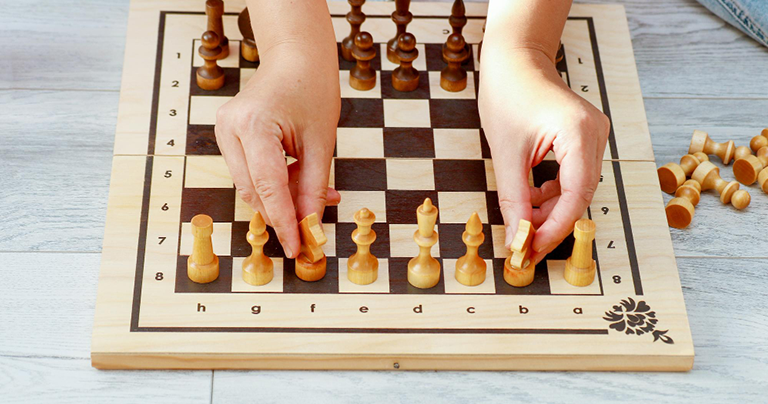
A Chess Board with Numbers and Letters is used to identify every square clearly and help players read, record, and understand moves. On a standard board, the columns are labeled a to h and the rows are numbered 1 to 8, so each square has a unique name such as e4 or c6. That grid system is the foundation of chess notation, which is the standard language used to describe moves in a game.
For children, beginners, and even many regular learners, this kind of board makes chess much easier to understand. Instead of saying “move the knight to that square near the center,” a player or online chess tutor can say “move the knight to f3.” That instantly makes instruction clearer. At Kaabil Kids, that is one reason coordinate boards are so useful in early chess training. They do not only make the board look more organized. They make learning more precise.
A labeled board also helps children connect what they see with what they hear in lessons. It gives them a simple visual system they can use while learning rules, following games, and improving their chess practice. Over time, that builds confidence and makes more advanced concepts, including chess tactics and even ideas like a Pin in Chess, easier to explain.
What a Chess Board with Numbers and Letters Actually Means
A Chess Board with Numbers and Letters is simply a regular chessboard with coordinates marked around the edges. The files, or vertical columns, are labeled with the letters a through h, and the ranks, or horizontal rows, are labeled 1 through 8. Each square is named by combining its file and rank, so a square like e4 means the e-file and the 4th rank.
This system matters because chess depends on exact communication. A coach cannot teach clearly if every square has to be pointed out differently each time. Coordinates solve that problem. They give every square a fixed identity.
For children, this often becomes one of the first big “aha” moments in chess. The board stops looking random. It starts to feel readable. Once a child understands that every square has a name, the game becomes less confusing and more structured.
That is why many beginners benefit from learning on a labeled board early. A good chess coach can use those coordinates to explain piece movement, basic strategy, and board awareness in a much more direct way.
Why Chess Board Coordinates Matter in Learning the Game
Coordinates are not just for advanced players. They are extremely useful while learning the basics.
When a child begins chess, they are already trying to remember how each piece moves, how to set up the board, and how to notice threats. Without coordinates, instructions can feel vague. With coordinates, the board becomes easier to navigate.
For example, a teacher can say:
- put your pawn on e4
- develop your knight to f3
- watch the square d5
That kind of clarity helps children follow lessons faster and with less confusion. It also improves board vision. Instead of seeing chess as a group of pieces moving around, the child starts seeing the board as a clear grid of meaningful squares.
This is a major advantage in chess training. The child begins learning how squares connect, how pieces control areas, and how stronger positions are built. These are important early habits for long-term improvement.
At Kaabil Kids, this is one reason a coordinate board is so helpful in beginner sessions. It helps young learners connect language, movement, and board awareness in one system.
How a Chess Board with Numbers and Letters Helps with Chess Notation
One of the biggest uses of a Chess Board with Numbers and Letters is learning chess notation. Chess.com’s help article explains that notation is the universal language of chess, where each move is written using letters and numbers. It also explains that pieces are represented by letters such as K for king, Q for queen, R for rook, B for bishop, and N for knight. A move like Be2 means the bishop moved to e2.
This is where coordinate boards become especially useful.
When a child sees Nc3, they can break it down:
- N means knight
- c3 is the destination square
When they see Qxg2+, they can understand that the queen captured on g2 and gave check. Chess.com also notes common notation symbols such as x for captures, 0-0 for kingside castling, 0-0-0 for queenside castling, + for check, and # for checkmate.
This matters for learning because notation is how players:
- record games
- read puzzles
- follow lessons
- review mistakes
- study classic games
Without coordinates, notation feels abstract. With a labeled board, notation starts making sense much faster.
That is why a strong chess guide for beginners should never treat board coordinates as a small detail. They are one of the simplest tools for making chess more understandable.
Why Beginners and Kids Find Coordinate Boards Easier to Use
Children learn best when the structure of a subject is visible. A board with numbers and letters gives them exactly that.
Instead of memorizing the game in a vague way, they begin to work with fixed references. That makes many parts of learning easier:
1. Instructions Become Simpler
A child can follow a move more easily when the destination square is clearly named.
2. Mistakes Are Easier to Review
If a move went wrong on f7 or d4, the child can go back and locate that square quickly.
3. Lessons Feel More Organized
A coach can explain ideas step by step without relying only on gestures or pointing.
4. Puzzle Solving Gets Easier
Many puzzle books and online lessons use notation. Coordinate boards help children connect the written move to the actual square.
5. Confidence Improves
A labeled board reduces confusion. That helps children feel more in control while learning.
This is especially useful when teaching younger children through an online chess tutor or chess coach, because verbal clarity matters more in online sessions. If a child already understands coordinates, the lesson moves more smoothly.
At Kaabil Kids, this is one reason coordinate boards support beginner confidence so well. The board becomes easier to read, and the child becomes more comfortable asking questions and following instructions.
Where a Chess Board with Numbers and Letters Is Most Useful in Practice
A Chess Board with Numbers and Letters is useful in several practical learning situations.
During Beginner Lessons
This is the most obvious use. It helps children identify squares, follow instructions, and understand piece placement more clearly.
During Online Chess Sessions
In chess coaching or lessons with an online chess tutor, coordinates make communication smoother. The coach can explain moves precisely without depending on physical pointing.
During Puzzle Practice
Many tactics puzzles depend on reading coordinates and notation correctly. A labeled board helps children work through these tasks with more confidence.
During Game Review
After a game, a child may hear that they missed a move on e5 or allowed a tactic on h7. Coordinates make that review much easier to follow.
During Tactical Learning
When studying forks, pins, skewers, or discovered attacks, square names matter. For example, if a coach is explaining a Pin in Chess, they may need to show exactly which square creates the pin and which piece is unable to move safely. Clear coordinates make that explanation much more effective.
During Independent Practice
Even when a child is playing alone or revising a lesson, a coordinate board supports better self-learning because it keeps the board readable.
This is where chess practice becomes more productive. The learner spends less time feeling lost and more time understanding what is actually happening.
Why Coordinate Boards Support Better Chess Training Over Time
The long-term value of a labeled board is not just convenience. It helps children build better learning habits.
As children improve, they need to do more than just move pieces. They need to:
- read notation
- follow examples
- review positions
- understand tactical ideas
- communicate moves clearly
A coordinate board supports all of that from the beginning. It becomes a bridge between beginner learning and more serious chess training.
It also encourages precision. Children begin to speak about chess more accurately. They say “bishop to g5” instead of “that diagonal square.” They understand why a move matters on a particular square. That sharper language leads to sharper thinking.
At Kaabil Kids, this matters because chess is not only about playing games. It is about helping children think clearly, learn systematically, and grow more confident in how they understand the board.
Conclusion
A Chess Board with Numbers and Letters is used to make the game easier to read, teach, record, and understand. The files a to h and ranks 1 to 8 give every square a clear identity, which supports board awareness and makes chess notation possible. Chess.com’s notation guide explains that this coordinate system is the base for reading moves such as Be2, Nc3, captures, castling, checks, and checkmates.
For beginners and children, that makes a huge difference. A labeled board turns chess into a clearer learning system. It helps with lessons, puzzles, review, and long-term confidence on the board.
At Kaabil Kids, this is exactly why coordinate boards are so useful in beginner learning. They help children move from confusion to clarity, and from simple moves to stronger chess practice and smarter chess training over time.
FAQs
What is a Chess Board with Numbers and Letters used for?
A Chess Board with Numbers and Letters is used to identify squares clearly, follow lessons more easily, and understand chess notation. Each square is named by a letter and a number, such as e4 or c6.
Why do chess boards have letters and numbers?
Chess boards use letters for files and numbers for ranks so every square has a unique name. This makes communication, notation, and learning much easier.
How does a coordinate chess board help beginners?
It helps beginners follow instructions, understand notation, review games, and learn more confidently because the board feels more organized and readable.
Is a chess board with numbers and letters useful for kids?
Yes. It is especially useful for kids because it reduces confusion and helps them connect moves, notation, and board positions more clearly during chess practice.
Does a coordinate board help with learning chess tactics?
Yes. It helps children locate key squares more easily while learning chess tactics, including ideas like forks and a Pin in Chess.
Why does Kaabil Kids use coordinate-based learning in chess?
Kaabil Kids uses clear, structured learning methods because children understand chess better when the board, moves, and square names are easy to follow.