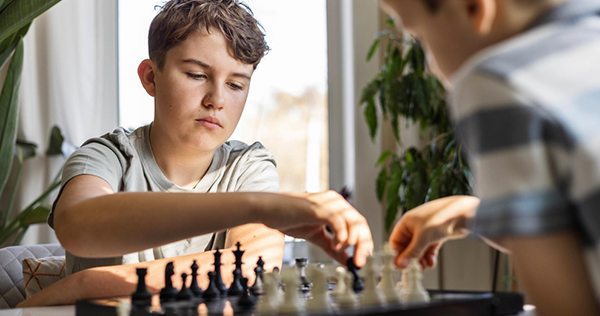
Finding the right chess academy in Mumbai for your child can feel like a serious decision. There are many options across the city, from local coaching centres and private tutors to structured online chess classes. For parents, the challenge is not just finding a class nearby. It is finding a learning space where the child feels supported, interested, and steadily improves.
Chess is one of those rare activities that is both fun and skill-building. It helps children focus, think ahead, solve problems, stay patient, and make better decisions. That is why many parents now see chess as more than a hobby. They see it as a meaningful skill development activity.
Still, every child learns differently. Some children are complete beginners. Some already know how the pieces move. Some may enjoy competition, while others need a gentle start. The right chess academy for kids should understand this difference.
At Kaabil Kids, chess learning is designed to be structured, child-friendly, and accessible. Through guided online learning, children can build strong chess foundations while learning at a pace that suits them.
Why Parents In Mumbai Are Looking For Meaningful Skill-Based Learning
Mumbai families often have busy routines. School, homework, travel, screen time, hobbies, and weekend activities can quickly fill a child’s day. Parents want activities that are useful, but not exhausting. Chess fits well into this need.
Unlike passive entertainment, chess asks children to think. A child must observe the board, understand threats, plan moves, and learn from mistakes. These small habits can support better focus and patience over time.
Many parents also look for activities that build confidence. Chess gives children a clear way to improve. A child who once struggled to remember piece movement can later solve tactics, win games, and explain ideas with confidence. That visible progress is encouraging.
This is why chess classes in Mumbai are becoming a popular choice for parents who want structured learning beyond academics. A good chess program gives children both mental exercise and enjoyment.
For younger children, chess starts with simple basics. For older children, it becomes a deeper game of strategy, calculation, and decision-making. That makes it suitable for different age groups and learning goals.
What Makes A Chess Academy A Good Fit For Kids
A good kids chess academy should not simply teach moves. It should create a learning path that helps children understand the game step by step.
For beginners, the academy should start with board setup, piece movement, basic rules, check, checkmate, and safe moves. The child should not feel rushed into advanced topics before the basics are clear.
For children who already know the rules, the focus should move toward tactics, opening principles, middle-game planning, endgame basics, and game review. A good academy should know when to move a child to the next level.
The best chess academy for kids usually offers:
Clear beginner, intermediate, and advanced levels
Child-friendly coaching
Regular chess practice
Puzzle-solving and game-based learning
Feedback after games
Progress tracking
Small or well-managed batches
A positive learning environment
Children learn better when they feel comfortable asking questions. If the class feels too strict or confusing, the child may lose interest. If it is too casual, the child may enjoy it but not improve much.
The right balance matters. A good chess academy should keep the child engaged while also helping them build real skills.
How To Judge Teaching Quality, Structure, And Child Engagement
Parents should look beyond big claims when choosing a chess academy in Mumbai. Many programs may mention achievements, tournaments, expert coaches, or years of experience. These details are useful, but teaching quality matters more for young learners.
A strong coach should be able to explain chess in simple language. Children should understand why a move is good, not just be told what to play.
A good chess learning structure should include a planned flow. One class should connect with the next. The child should slowly move from basics to tactics, from tactics to strategy, and from strategy to stronger gameplay.
Parents can judge teaching quality by noticing a few things:
Does the coach explain patiently?
Does the child get to solve positions during class?
Are mistakes reviewed properly?
Does the child receive feedback?
Is the class interactive or only lecture-based?
Does the child look interested after class?
Is there a clear plan for improvement?
Child engagement is very important. A child who enjoys learning is more likely to practise. A child who practises regularly is more likely to improve.
This is where child-friendly coaching becomes essential. Children need encouragement, simple examples, practice games, and correction without fear. A good coach helps them feel that mistakes are part of learning.
Online Vs In-Person Chess Learning For Busy City Families
Parents in Mumbai often compare offline chess academies with online learning. Both can work well. The right choice depends on the child’s comfort, the family schedule, and the quality of the coaching.
In-person classes can be helpful for children who enjoy physical interaction, classroom energy, and board-based practice. If the academy is nearby and the child enjoys attending, offline learning can be a good option.
Online chess classes can be better for families who want flexibility and access to structured coaching without travel. In a city like Mumbai, travel time can be a major factor. Online classes save time and allow children to learn from home.
Here is a simple comparison:
| Factor | In-Person Chess Academy | Online Chess Classes |
|---|---|---|
| Travel | Requires commute | Learn from home |
| Flexibility | Fixed location and timing | Easier to manage schedules |
| Coach Access | Limited by area | Wider access to trained coaches |
| Practice Tools | Physical board practice | Digital boards, puzzles, analysis |
| Parent Visibility | Depends on academy updates | Easier to observe progress |
| Comfort | Good for social learners | Good for home-based learners |
The best option is the one that helps your child learn consistently. A nearby class is useful only if the teaching is strong. An online class is useful only if it is interactive, structured, and engaging.
At Kaabil Kids, online chess learning is designed to give children guided support, regular practice, and age-friendly teaching from home.
What Parents Should Notice Before Making A Final Choice
Before choosing a chess academy in Mumbai, parents should observe both the program and the child’s response to it.
A trial class can be useful. During or after the class, notice how your child feels. Did they understand the lesson? Did they enjoy it? Did they ask questions? Did they seem excited to learn more?
Parents should also check the academy’s communication. A good program should be able to explain what the child will learn, how progress will be tracked, and how mistakes will be corrected.
Use this simple parent checklist before enrolling:
Is the class suitable for my child’s age?
Is the level right for my child?
Does the coach teach in a child-friendly way?
Is there a clear learning structure?
Will my child get enough practice?
Are games reviewed after play?
Will parents receive feedback?
Is the batch size manageable?
Can the child continue to higher levels later?
Does the program focus on learning, not only winning?
The final choice should feel practical and comfortable. The child should not feel pressured. The parent should not feel confused. The academy should offer clarity, structure, and support.
Conclusion
Choosing the right chess academy in Mumbai is not only about location. It is about finding the right learning environment for your child.
A good academy should offer structured lessons, child-friendly coaching, regular practice, feedback, and a clear growth path. It should help children enjoy chess while building focus, patience, problem-solving, and decision-making skills.
Parents should compare options carefully. Look at teaching quality, class structure, engagement, feedback, and convenience. A strong program will not only teach your child how to play chess. It will help your child learn how to think better.
With Kaabil Kids, children can explore structured online chess classes designed for young learners. From beginner basics to stronger gameplay, the focus is on helping every child grow one move at a time.
Chess is a beautiful skill to begin early. The right guidance can make that journey simple, enjoyable, and truly meaningful.
FAQs
Q1. How Do I Choose The Right Chess Academy In Mumbai For My Child?
Choose a chess academy in Mumbai that offers structured levels, child-friendly coaching, regular practice, game review, parent feedback, and a learning pace that matches your child’s age and skill level.
Q2. Are Chess Classes In Mumbai Good For Beginners?
Yes, chess classes in Mumbai can be useful for beginners if they start with basic rules, piece movement, check, checkmate, simple tactics, and fun practice instead of advanced theory.
Q3. What Makes A Good Chess Academy For Kids?
A good chess academy for kids should have trained coaches, clear lesson plans, interactive teaching, practice games, mistake correction, progress tracking, and a supportive learning environment.
Q4. Are Online Chess Classes Effective For Kids?
Yes, online chess classes can be effective when they include live teaching, puzzles, practice games, feedback, and structured learning. They are also convenient for busy city families.
Q5. What Is The Right Age To Start Chess Classes?
Many children can start learning chess around 5 or 6 years of age, depending on interest and attention span. The class should be simple, fun, and age-appropriate.
Q6. What Should Parents Ask Before Joining A Kids Chess Academy?
Parents should ask about class level, batch size, teaching method, practice time, game review, progress updates, coach experience, and the child’s long-term learning path.
Q7. Why Choose Kaabil Kids For Chess Learning?
Kaabil Kids offers structured online chess learning for children with guided coaching, regular practice, and a child-friendly approach that helps young learners build confidence and thinking skills.
Q8. Can Chess Help With Skill Development In Children?
Yes, chess is a strong skill development activity because it helps children improve focus, patience, planning, memory, logical thinking, confidence, and decision-making.