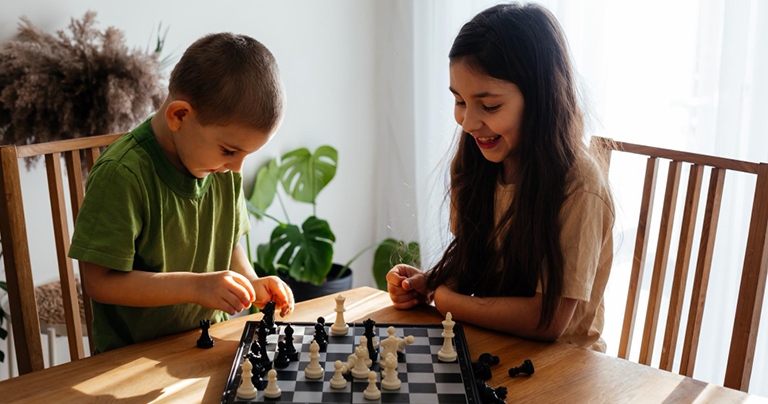
Summer is often the time when parents look for something meaningful for their children to do. School is lighter, routines are more flexible, and kids have more space to explore new skills. For many families, this is where a summer chess camp or structured kids chess program becomes a smart choice.
Chess is not just another holiday activity. It helps children think better, wait patiently, plan ahead, solve problems, and learn from mistakes. These are skills that stay useful long after summer ends.
At the same time, not every chess class is the right fit for every child. Some children are complete beginners. Some already know the rules but need better guidance. Some enjoy competition, while others need a slower, more encouraging start.
That is why choosing the right chess classes for kids matters. A good program should match your child’s age, skill level, attention span, and learning style. It should make chess enjoyable, not stressful.
At Kaabil Kids, chess learning is built around children, not just the chessboard. Through structured online chess coaching, young learners can build focus, confidence, and stronger thinking skills in a guided, age-friendly way.
Why Summer Chess Programs Appeal to Many Parents
Summer chess programs are popular because they offer the right mix of learning, fun, and structure. Parents want children to enjoy their break, but they also want them to use their time well.
A good chess program gives kids something productive to look forward to. It keeps the mind active without feeling like schoolwork. Children learn through games, puzzles, practice positions, friendly matches, and guided lessons.
For parents, chess also feels like a useful long-term skill. Unlike many short-term summer activities, chess supports child skill development in a deeper way. It helps children improve concentration, memory, patience, and decision-making.
Summer is also a good time to start because children usually have fewer academic pressures. They can learn the basics properly, practise regularly, and build confidence before school routines become busy again.
Many parents also choose chess because it works well across age groups. A young child can start with piece movement and simple checkmates. An older child can work on tactics, openings, strategy, and tournament preparation.
This flexibility makes chess one of the most practical and meaningful summer learning choices.
What Makes a Good Summer Chess Program for Kids
A good summer chess program should not only teach rules and moves. It should help children understand the game step by step.
The first thing to look for is structure. A strong kids chess program should have clear levels, planned lessons, practice time, and regular feedback. Children should know what they are learning and why it matters.
The second thing to look for is child-friendly teaching. Kids do not learn well when lessons feel too technical or rushed. The coach should explain ideas simply, use examples, and keep the child engaged.
The third thing is practice. Chess cannot be learned only by listening. Children need to solve puzzles, play games, review mistakes, and try ideas on the board. This is where guided practice becomes important.
A good program should include:
Basic rules and board understanding
Tactics and pattern recognition
Opening principles
Checkmate ideas
Endgame basics
Game practice
Mistake review
Fun challenges or mini tournaments
For beginners, the program should not jump too fast into competition. For advanced learners, it should not stay only at basic moves. The best chess academy for kids understands that every child learns differently.
Kaabil Kids focuses on structured chess learning so children can build skills gradually, without feeling lost or pressured.
How to Match the Program with a Child’s Age and Skill Level
Before choosing a summer chess program, parents should first understand where their child stands.
A beginner may know nothing beyond how the pieces move. Another child may play casually with family but not understand strategy. Some children may already be playing online games and want to improve.
Matching the level correctly is important.
For younger beginners, the focus should be on fun learning. They should learn piece movement, simple attacks, basic checkmates, and safe play. The goal is to help them enjoy chess and feel confident.
For children who already know the basics, the program should introduce tactics, opening principles, middle-game plans, and better decision-making. They should learn how to stop giving away pieces and start noticing threats.
For more serious learners, the program should include game analysis, tournament preparation, time management, calculation, and strategic thinking.
Parents should also consider attention span. A six-year-old may not sit comfortably through a long session. A ten-year-old may be ready for deeper lessons. The right program will adjust the pace and format based on the child.
This is one reason many parents prefer online chess classes for kids. A well-designed online format can offer level-based learning, flexible batches, regular practice, and access to trained coaches from home.
Online vs Offline Summer Chess Learning: What to Compare
Parents often wonder if they should choose online or offline chess classes. Both can work well, but the right choice depends on your child, schedule, and learning goals.
Offline chess classes can be useful for children who enjoy in-person interaction. They may like sitting across from another player, using a physical board, and learning in a classroom setting.
Online chess learning is useful for families who want flexibility, comfort, and access to expert coaching without travel. It also works well for children who are comfortable learning on screen and can stay engaged with the right teacher.
When comparing online and offline options, parents should look at more than location. The quality of coaching matters most.
Here is a simple comparison:
| Factor | Online Chess Classes | Offline Chess Classes |
|---|---|---|
| Convenience | Learn from home | Requires travel |
| Coach Access | Wider access to trained coaches | Limited by location |
| Flexibility | Easier scheduling | Fixed batch timings |
| Practice Tools | Digital boards, puzzles, analysis | Physical board practice |
| Parent Visibility | Easier to track classes and feedback | Depends on academy updates |
| Social Interaction | Online peer interaction | In-person peer interaction |
For many families, online chess coaching is a strong summer option because it saves travel time and keeps learning consistent. The key is to choose a program that is interactive, not passive.
A child should not just watch a screen. They should solve, answer, play, ask questions, and receive feedback.
Questions Parents Should Ask Before Enrolling
Before enrolling in any summer chess camp or program, parents should ask a few practical questions. These questions help you understand if the class is truly suitable for your child.
Start with the child’s level. Is the batch for beginners, intermediate learners, or advanced players? A mismatch can make the child bored or overwhelmed.
Next, ask about the teaching method. Will the class include live coaching, puzzles, games, and review? Or will it only be theory?
Parents should also ask about class size. Smaller or well-managed batches usually allow better attention. If the group is too large, a child may not get enough support.
Useful questions include:
What age group is the program designed for?
Is this suitable for complete beginners?
Will my child get practice games?
How are mistakes reviewed?
Will there be progress feedback?
Are the coaches trained to teach children?
How many students are in each batch?
Does the program include puzzles or tournaments?
What happens after the summer program ends?
These questions help parents choose with more confidence.
A good online chess tutor or academy should be able to explain the learning path clearly. Parents should feel that the program has a plan, not just random chess sessions.
Conclusion
Choosing the right summer chess program for kids is not about finding the most advanced class. It is about finding the right fit.
A good program should match your child’s age, current skill level, learning style, and confidence. It should teach chess in a way that feels structured, supportive, and enjoyable.
For beginners, the goal may be to understand the board and enjoy the game. For growing learners, the goal may be to improve tactics, planning, and decision-making. For serious players, the goal may be tournament readiness and deeper analysis.
Chess is one of the best summer activities because it supports both learning and personality growth. It helps children think before acting, stay calm under pressure, solve problems, and learn from losses.
With Kaabil Kids, parents can explore structured online chess classes for kids designed to make chess learning accessible, guided, and child-friendly. Through the right chess classes for kids, children can use their summer to build a skill that grows with them.
A good summer chess program does not just fill time. It helps children build better thinking habits, one move at a time.
FAQs
Q1. What Is A Summer Chess Program For Kids?
A summer chess program for kids is a short-term chess learning course designed during the summer break. It may include beginner lessons, tactics, puzzles, practice games, friendly tournaments, and coach feedback.
Q2. Are Summer Chess Camps Good For Beginners?
Yes, summer chess camps can be very useful for beginners if the program starts with basics and uses child-friendly teaching. Beginner chess classes should focus on piece movement, simple rules, basic checkmates, and confidence-building.
Q3. What Age Is Best To Start Chess Classes For Kids?
Many children can start learning chess around the age of 5 or 6, depending on their interest and attention span. The right chess classes for kids should match the child’s age and learning pace.
Q4. Are Online Chess Classes For Kids Effective?
Yes, online chess classes for kids can be effective when they include live teaching, interaction, puzzles, practice games, and regular feedback. The class should be active, not just video-based learning.
Q5. How Do I Choose The Right Chess Academy For Kids?
Choose a chess academy for kids that offers structured levels, trained coaches, child-friendly teaching, game practice, progress tracking, and clear communication with parents.
Q6. What Should A Beginner Chess Program Include?
A beginner chess program should include board basics, piece movement, check and checkmate, simple tactics, safe piece play, practice games, and fun exercises that keep children interested.
Q7. Why Choose Kaabil Kids For Online Chess Coaching?
Kaabil Kids offers structured online chess coaching for children, helping young learners build focus, confidence, chess basics, pattern recognition, and decision-making skills through guided learning.
Q8. Can Chess Help With Child Skill Development?
Yes, chess supports child skill development by improving concentration, memory, patience, planning, problem-solving, and emotional control. These skills can help children both inside and outside the classroom.