The trial class ends, the screen goes quiet, and your child is already asking when the next one is. You’re glad they enjoyed it, but a bigger question is sitting right behind that relief: was that just a good first impression, or is this actually the right fit? A single session, however fun, is a small sample size to base a decision on.
This guide walks through what a trial is actually meant to show you, the questions worth asking yourself afterward, and exactly what changes once you move from a one-off session to full online chess classes for kids, so the decision feels informed rather than rushed.
What a Trial Class Is Really Designed to Show Parents
What is the purpose of a chess trial class? A trial class isn’t meant to test how good your child already is at chess. It’s meant to show you how a coach teaches, how your child responds to that particular teaching style, and whether the format actually holds their attention, before you commit to anything longer.
A well-run trial should give you a real look at a few specific things:
- Teaching style: Does the coach explain ideas simply, or lean on jargon a beginner wouldn’t follow?
- Pacing: Does the class move at a speed that suits your child’s age, or does it feel rushed or too slow?
- Engagement: Is your child actively participating, asking questions, and reacting, or quietly watching and waiting for it to end?
- Structure: Does the session feel like it’s building toward something, or is it a disconnected, one-off activity?
A single chess demo class can’t show you long-term progress, that only shows up over weeks of a real chess academy for kids curriculum. What it can show you is whether the teaching approach and your child’s personality actually work well together, which is the piece most parents are really trying to judge.
Questions Parents Should Ask Themselves After the Trial Class
What should parents look for after a chess demo class? Beyond “did my child have fun,” a few more specific questions give you a clearer answer than a gut feeling alone:
- Did my child stay engaged for the full session, or did their attention drift after the first few minutes?
- Did the coach adjust to my child, or did the class feel like the same script regardless of who was on the call?
- Did my child ask questions or hesitate to speak up, and did the coach make space for that either way?
- Do I understand what comes next, or am I still unclear on how the curriculum actually progresses from here?
- Does the schedule realistically fit our routine, not just for this week, but as a regular weekly commitment?
If most of these have a clear, positive answer, that’s a genuinely good sign. If several feel uncertain, that’s worth raising directly rather than guessing, which is exactly where a good chess academy for kids should be able to help.
How Kaabil Kids Supports Parents in Making the Enrollment Decision
Kaabil Kids doesn’t expect a parent to decide on the spot right after the trial ends. The enrollment process is built to give you the information you actually need, not just a countdown timer on a discount:
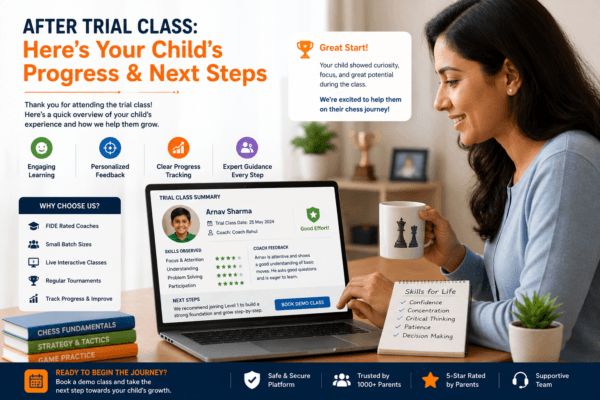
- Coach feedback: You get a short, specific read on how your child engaged during the trial, not just a generic “great session!” message.
- A recommended track: Based on age and the trial itself, you’re told which batch and starting stage actually fits your child, rather than being placed generically.
- Clear next steps: Pricing, schedule, and what the first month of online chess coaching looks like are laid out plainly, with no pressure to decide immediately.
- A real person to ask: If something from the trial is unclear, parents can raise it directly instead of piecing together an answer from a website.
The goal is a decision you feel good about a month later, not just one you made quickly because a discount was about to expire.
What to Expect Once You Enroll Your Child
Once you move from a trial to full chess classes for kids, quite a lot changes beyond just “more classes.” Here’s what actually shifts:
| What Changes | Trial Class | After Enrollment |
| Coach | A single introductory session, sometimes with a coach assigned for demo purposes | A consistent, matched coach who teaches your child every week |
| Curriculum | A small preview of one topic or idea | Full sequence: fundamentals, tactics, opening principles, endgames |
| Batch | Often a one-off or demo group | A fixed, age-banded small batch your child stays in |
| Progress Tracking | Not applicable, just one session | Stage-by-stage tracking with regular parent updates |
| Schedule | A single trial slot | A fixed weekly time your family can plan around |
Your child is placed in a small, age-banded batch with a consistent coach, not a rotating cast of trainers. The curriculum follows the same sequence for everyone, fundamentals, tactics, opening principles, and endgames, so progress actually builds week over week instead of resetting with each session. You’ll also start receiving regular updates on where your child stands, rather than having to ask.
Conclusion
A trial class is a small window, useful for judging fit, not a full picture of long-term progress. The real decision comes down to whether the teaching style suited your child, whether the pacing felt right, and whether you have a clear sense of what happens next. If the trial answered those questions well, enrollment is simply the next step in a curriculum your child has already started.
If you’re weighing whether to move forward, explore Kaabil Kids online chess coaching or book a free trial class if you haven’t already, and see for yourself before deciding.
FAQs
Q1. How long is the trial period before enrollment?
Most families attend a single trial class before deciding, though it’s meant to be a genuine sample of the teaching style, not a rushed sales pitch.
Q2. Can we request a different coach if the trial didn’t feel like the right fit?
Yes. Fit matters as much as credentials, and a child can be matched with a different coach if the first session didn’t feel right.
Q3. Is there any pressure to enroll immediately after the trial class?
No. Parents receive coach feedback and a recommended track so they can make an informed decision on their own timeline.
Q4. What if my child needs a second trial class to decide?
That’s a reasonable ask, especially for younger children who may need a bit more time to settle in before you can judge fit properly.
Q5. How soon after enrolling does my child get a fixed coach and schedule?
Enrollment comes with a fixed weekly schedule and a consistent coach from the very first regular class, so there’s no unpredictable rotation to adjust to.