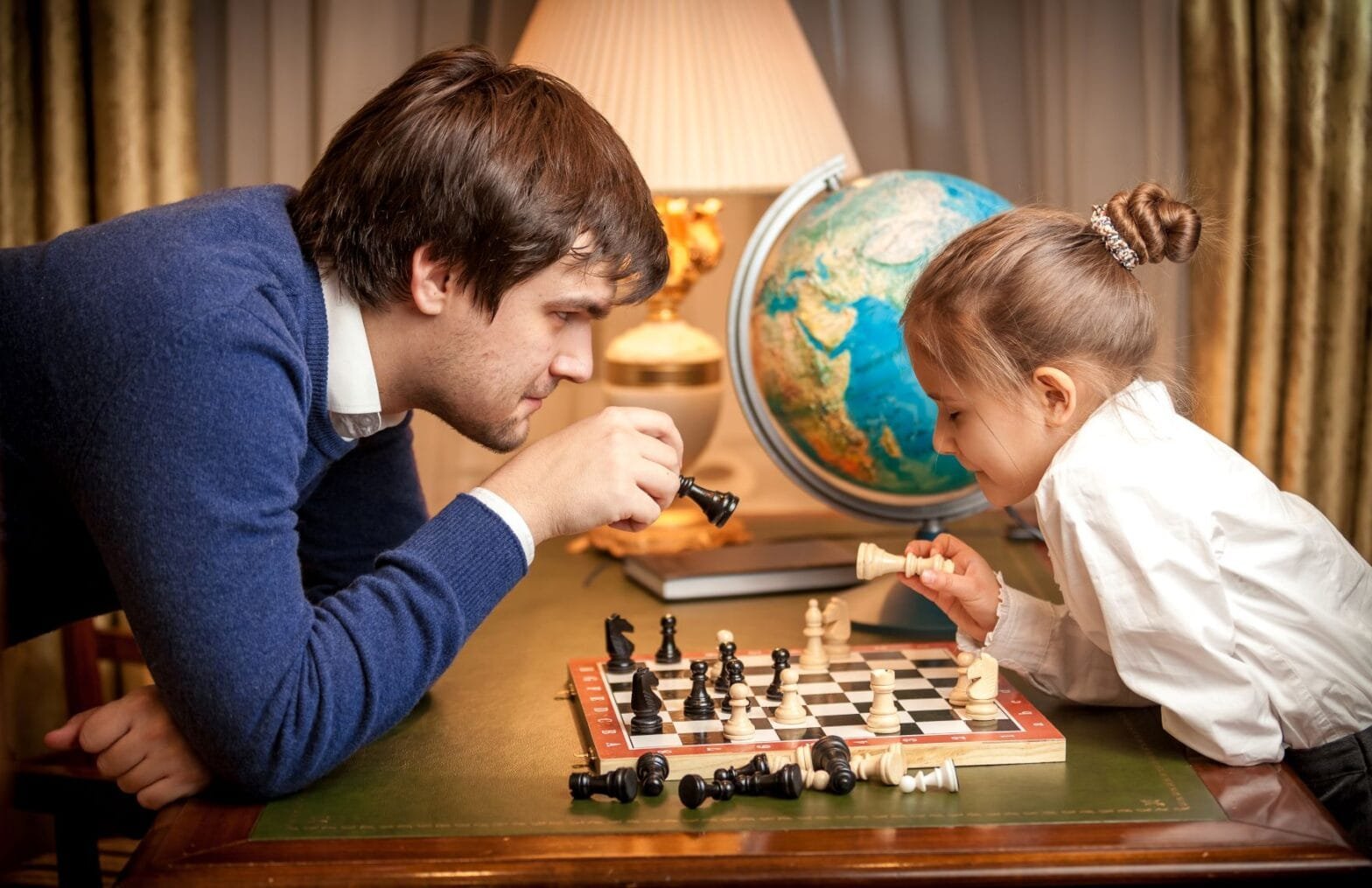
A child plays four games a week, finishes every puzzle set and shows up to class on time. Yet the same rook blunder from January shows up again in March. The parent is not imagining it. Effort is high and improvement is flat.
The gap sits in one missing habit: playing a game teaches a child to play chess, but reviewing it teaches them to play better. Most young players do the first and skip the second. Chess game analysis, the practice of returning to a finished game to understand what happened, is the missing step behind most stalled chess improvement techniques. This blog covers what it involves, why it beats extra games alone, and how post-game review becomes a regular habit.
What Is Chess Game Analysis, and Why Don’t Most Kids Do It?
Chess game analysis means going back through a completed game, move by move, to find decisions that were wrong, nearly right or better than expected. It is not a punishment for losing, not a session cataloguing every suboptimal move, and not about replaying the game to feel bad. The goal is one usable lesson extracted before the game is forgotten.
Most children skip it unprompted because starting the next game feels better than sitting with the last one. A child never shown what to look for has no starting point, so the chess learning process stays at “playing” rather than advancing to “learning from play.” That gap is what post-game review is designed to close.
Why Does Reviewing Chess Mistakes Matter More Than Playing More Games?
Skills are built through corrected repetition, a specific error named and fixed, not repetition alone. A 2025 systematic review published in Frontiers in Education found that tailored, specific feedback consistently improved student achievement, while vague feedback left performance flat (Frontiers in Education, 2025). A separate 2025 study presented at the Educational Data Mining conference found that correct-or-incorrect feedback significantly sped up learning, while general feedback slowed it (Educational Data Mining, 2025). Neither study looked at chess directly, but the mechanism matches the board exactly.
A child who plays ten games and reviews none reinforces good habits and chess mistakes in equal measure. A child who plays five games and reviews three specifically targets the weak habits for correction. The chess learning process compounds once errors are named rather than repeated, which is what good chess coaching benefits are built around.
Without post-game review, the same chess mistakes reappear across different opponents, wins feel random and losses feel like bad luck, and intuition builds alongside blind spots in equal measure until progress stalls. With post-game review, specific errors get named and gradually eliminated, both results become data points rather than verdicts, and each session adds a concrete lesson that carries forward.
What Are the Best Post-Game Questions to Ask a Child After a Chess Game?
Good post-game review does not begin with a computer engine. It begins with a question that puts the child in control before any external tool opens. Three questions work across ages and levels: was there a moment the game felt like it shifted? Was there a move made quickly that felt wrong the second it left your hand? Was there a point where you did not know what to do and simply guessed?
These questions point a child straight to the moments where post-game review delivers the most value, and they do not require a coach to ask them.
| Age Group | Best Starting Post-Game Review Question |
| 5 to 8 years | Which of your pieces felt most useful? Which felt stuck the whole game? |
| 9 to 11 years | Was there a move you made quickly that you wish you’d thought about longer? |
| 12 to 15 years | What was the plan you were carrying out, and where did it stop working? |
The Compounding Secret: Why Reviewed Games Beat Ten Forgotten Ones
Each reviewed game produces one or two specific lessons, tested in the next game and reviewed again to check whether the lesson stuck. Improvement built this way tends to outpace improvement built on volume alone.
A Nature-published study on retrieval practice and feedback timing found that students given corrective feedback scored close to double what a no-feedback group scored one month later, a gap that widened over time (Humanities and Social Sciences Communications, 2024/2025). This is a learning-sciences finding applied to chess by analogy, not a chess-specific study. But the pattern maps directly: specific chess mistakes, specific correction, tested next game.
Chess improvement techniques tied to a game a child actually remembers land better than abstract puzzles because the emotional context of the game is still live. One of the quieter chess coaching benefits parents notice after several months is that their child is no longer surprised by the same position type twice. That is the chess learning process working as it should.
Conclusion :
Kaabil Kids gives every child aged 5 to 15 a trained coach who reviews their games, names the chess mistakes that matter most at their level, and builds the post-game review habit into every session, so improvement compounds rather than stalls. Explore Kaabil Kids’ online chess coaching | Book a free trial class
Why a Coach Catches What a Parent Can’t
A parent asking the three questions above provides a strong start. A trained coach adds what a parent usually cannot: knowledge of which chess mistakes are fixable at a given level, which point to a specific recurring weakness, and which patterns surface across multiple games.
A coach identifies the one most impactful error to address first. These chess coaching benefits accumulate over months, since mistakes named in one session disappear from the next, freeing attention for the next layer of chess improvement techniques.
Kaabil Kids builds post-game review into every coaching session as a core part of the chess learning process, not an optional extra. Each child’s games are reviewed by a FIDE-rated trainer who flags the two or three chess mistakes with the highest impact and sets targeted chess improvement techniques for the following week. Kaabil Kids’ in-house psychologist supports the emotional side, helping children treat game review as productive information rather than a verdict on their ability. Families comparing online chess classes, a chess tutor online or a chess academy that treats game review as central to the curriculum will find that focus built into every Kaabil Kids session.
Playing chess without reviewing it builds experience, not skill. Chess game analysis, even with two or three simple questions after a game, turns every result into a lesson. The improvement compounds and the chess mistakes shrink. A child who reviews three games a week will eventually outpace one who plays ten and never looks back.
Frequently Asked Questions
Q1. What is chess game analysis and how does it help children improve?
Chess game analysis is the process of reviewing a completed game to spot decisions that were wrong, nearly right or stronger than expected, and understanding why. It turns each result into a usable lesson. Without it, good and bad habits get reinforced in equal measure. With it, mistakes are isolated and corrected on purpose.
Q2. How do you review a chess game with a child without discouraging them?
Start with a question rather than a correction. Asking what felt like the turning point gives a child control over their own post-game review instead of putting them on the defensive. Keep the focus on one or two chess mistakes per session, not every suboptimal move. Treat wins and losses as equally useful data.
Q3. How often should a child analyze their chess games?
Reviewing two to three games a week works better than reviewing every game played. The chess learning process benefits more from fewer games reviewed carefully than from a high volume glanced at briefly. Weekly consistency matters more than completeness.
Q4. What is the difference between self-analysis and coach-led chess game analysis?
Self-analysis, a parent or child reviewing a game with simple questions, is a strong habit that costs nothing but attention. Coach-led review adds a trained eye that separates a one-off slip from a recurring weakness, prioritizes which chess mistakes to fix first, and applies chess improvement techniques suited to that child’s specific level. The chess coaching benefits of a trained coach show up fastest once a child has plateaued on self-directed play.